

August 10, 2026
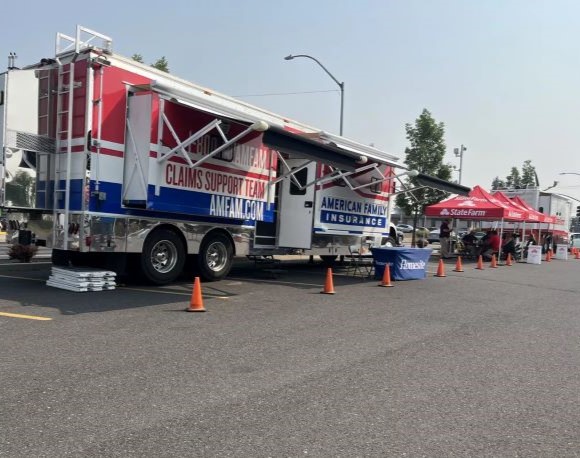
Members of the American Property & Casualty Insurance Association, the National Association of Mutual Insurance Companies and the Northwest Insurance Council have established an “Insurance Village” on the grounds of Shadle Park High School in Spokane to help wildfire disaster victims.
They’re encouraging people whose property was damaged or destroyed by wildfire to contact their insurer through their insurers’ toll-free claims number, app, website or by text to file their claim. Even if residents are still evacuated, they can reach out to their insurer to begin the claims process, the groups said.
They advised that homeowners and renters insurance policies generally include coverage for additional living expenses (ALE) if a covered loss makes their home uninhabitable. The additional living expense provision of their policy may help pay for things like temporary housing, laundry services, restaurant meals, and more, subject to the policy deductible. We encourage policyholders to also ask their insurer or agent if their policy includes ALE coverage for expenses incurred while they are evacuated – in some cases, even if their home is not damaged but is inaccessible.
APCIA, NAMIC and NWIC offer the following tips for navigating the recovery process after a wildfire:
- Contact your insurer to get the claims process started. While evacuated, contact your insurer. You do not need to wait until you return home before reaching out to your insurer. Insurers can be contacted via their toll-free number, app, or website.
- Discuss coverage for temporary housing with your insurer. If you are not able to live in your home, your insurance policy may provide coverage for additional living expenses which can help you obtain temporary housing while you rebuild or repair your home.
- Work closely with your adjuster. Adjusters will walk you through the claims process, answer questions, estimate damage, and settle your claim.
- Beware of scammers and unscrupulous contractors. Work with your insurer first and do not get pressured into signing anything from a third-party vendor.
- Stay up to date on payments. Continue to pay your mortgage and property taxes while you rebuild or repair your home.
- Keep insurance while rebuilding. This is also a good time to evaluate your flood risk and consider your need for flood insurance. Rainy seasons can trigger flooding and mudflows after a wildfire, neither of which are covered under a standard homeowners policy.
- Be aware that a recent Emergency Order from Washington Insurance Commissioner Patty Kuderer provides additional rights and protections for consumers impacted by wildfires across Washington.
For those in an area that may be threatened, but have not yet been ordered to leave, there are also steps residents can take to protect their finances and reduce risk.
- Understand and update your insurance policy. Contact your insurance company or agent to ask questions about what your policy covers, to avoid any gaps in your coverage, and make sure your policy is up to date.
- Create a home inventory. Use your smartphone to take pictures or videos of each room in your house and save it to a place where you can easily retrieve it, like the cloud.
- Create five feet of defensible space. When there is a wildfire, embers are the number one enemy. Create a five-foot noncombustible zone around your home and deck, keep mulch and plants away from your home, remove dead trees and shrubs.
- These actions can help prevent embers from igniting vegetation or other items directly adjacent or connected to your home.
Photo credit: Isla Hansen/The Spokesman-Review