

January 19, 2026
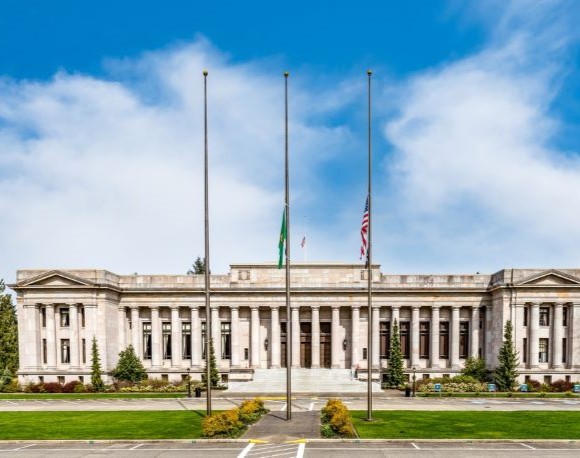
The Washington Supreme Court will hear oral arguments Jan. 22 in a closely watched case challenging the constitutionality of Initiative 2066, the voter-approved measure protecting natural gas as an energy choice statewide.
Nearly 2 million voters backed I-2066 in November 2024, signaling strong support for preserving consumer choice and energy reliability as Washington debates its energy future.
“Highly political efforts over the last decade to ban natural gas take options away from homeowners, strain the energy grid and push utility and housing costs even higher,” said BIAW Executive Vice President Greg Lane. “We drafted I-2066 with one clear purpose: to protect energy choice for today’s homeowners and the next generation.”
A new opportunity to preserve energy choice
The Washington Supreme Court accepted direct review of the case on Sept. 3, 2025, and will consider the case “de novo,” meaning they will review the case on its merits without taking an earlier King County Superior Court decision into consideration.
“We’ve faced politically motivated challenges every step of the way in our fight to protect natural gas for Washington homeowners and businesses,” Lane said. “We drafted this initiative to withstand challenges such as this. We are confident the Washington State Supreme Court will uphold it and honor voters’ wishes.”
Watch the hearing live on TVW at 9 a.m. on Jan. 22.
Strong support for 2066
Seven amicus memorandum or briefs have been filed in support of the Attorney General’s Office and BIAW’s position defending the constitutionality of Initiative 2066.
"Strong support from across Washington demonstrates the strength of our position," Lane said.
Associated Builders and Contractors (Western Washington & Inland Pacific)
Argues I-2066 complies with the Washington Constitution’s single-subject rule because it addresses one unified purpose: preserving energy choice. The brief warns that striking the initiative would weaken the voter initiative process and allow courts to invalidate comprehensive reforms that voters clearly understood and approved.
Association of Washington Business (AWB)
Contends I-2066 was carefully drafted within constitutional limits and mirrors how the Legislature routinely passes complex, multi-part laws to achieve a single policy goal. Declaring it unconstitutional would disrupt both the initiative process and future lawmaking.
Heating, Air-Conditioning & Refrigeration Distributors International (HARDI)
Maintains that energy choice necessarily includes protecting both access to natural gas and the appliances that rely on it. The brief argues voters acted constitutionally to remove multiple barriers created by prior laws, all tied to one issue: preserving energy choice.
Washington Aggregate & Concrete Association
Emphasizes economic stability, construction viability, and energy reliability. The brief says I-2066 advances a balanced approach that respects voter intent and avoids forcing rapid electrification that could increase costs and disrupt essential construction materials.
Northwest Hearth, Patio & Barbecue Association
Argues the initiative had to address access, infrastructure, and appliances together to be effective. A narrower measure would have failed to protect consumers and businesses from regulatory workarounds that still eliminate natural gas use.
Washington Food Industry Association & Washington Hospitality Association
Warns that removing natural gas threatens affordable food, restaurant operations, and grocery access statewide. The brief ties all provisions of I-2066 to a single objective: preventing policies that would function as a de facto gas ban and drive up food costs.
Focuses on the real-world, local impacts of the constitutional challenge to Initiative 2066. It emphasizes how legal uncertainty around energy policy affects housing production, permitting, and project feasibility in Washington’s most housing-constrained counties. The brief highlights the risk of higher costs, delays, and regulatory confusion for builders, local governments, and homebuyers, and stresses the need for clear, stable rules to support housing affordability and supply.
Next steps
BIAW expects the court will issue its ruling in the next several months.